
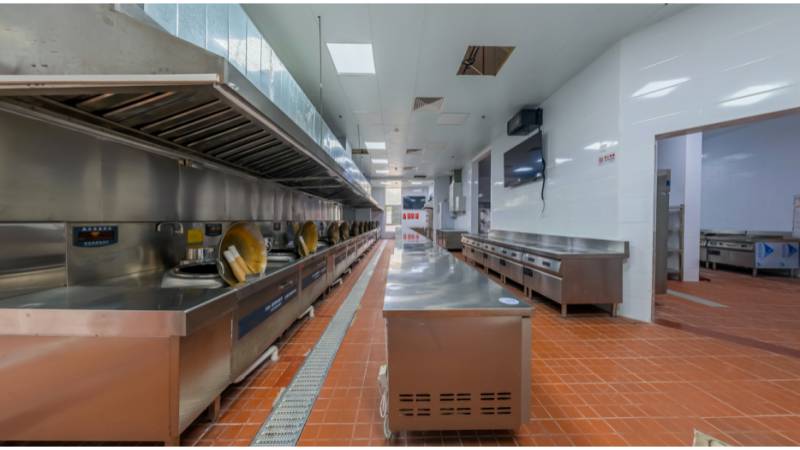
Can you think of an environment where things don’t seem to slow down? If your answer is a commercial kitchen, there’s a good chance you’ve worked in one.
In a commercial kitchen, the floor usually keeps up with it all, right until sanitation routines start dragging on longer than they should. That’s usually when it becomes obvious that the surface underfoot is doing more than just sitting there. It directly shapes how easy or tricky daily cleaning feels.
What can possibly make sanitation less of a daily grind? Commercial kitchen epoxy floor coatings.
The Reality of Daily Kitchen Cleaning Cycles
Cleaning in a kitchen isn’t a once-and-done task. It runs in cycles throughout the day, reacting to whatever’s happening on the floor at any given moment. Grease from cooking stations, bits of food, water runoff, and cleaning chemicals all come into contact with the surface again and again. Workers deal with the following:
- Pre-service cleaning before food preparation begins
- Mid-service wipe downs during peak activity
- End-of-day deep cleaning with stronger chemicals
Why Flooring Type Changes How Easy (or Hard) Cleaning Becomes
Some floors handle cleaning easily, while others turn it into a drawn-out process. The difference usually comes down to how the surface is built. Porous materials tend to absorb moisture and grease, which means cleaning only tackles what’s visible on top while the rest slowly settles deeper in.
Sealed surfaces behave differently, letting everything stay on top where it can actually be removed properly. Grout lines often complicate things further, acting like little pockets where grime builds up over time. Then there’s always that one corner in a kitchen that never quite comes clean no matter what gets done to it or no matter how consistent the effort is.
Once those patterns show up, cleaning starts feeling less effective, even when everything is being done correctly.
How Epoxy Flooring Supports Faster, More Reliable Cleaning Routines
Epoxy flooring creates a sealed, non-porous surface, meaning liquids, oils, and cleaning agents stay on top instead of soaking into the material. That alone changes how predictable and efficient sanitation routines feel. It’s pretty much like cleaning a smooth benchtop versus scrubbing between tiled grout lines. One allows a quick wipe-down, and the other takes a bit more persistence than anyone wants after a long shift.
Slip Resistance, Wet Zones, and Staff Movement
Kitchen environments shift between wet and dry areas constantly, especially during cleaning. Water gets moved around quickly, detergents are applied, and staff still need to keep things moving without hesitation. That’s where flooring safety becomes part of the cleaning routine itself.
Epoxy flooring systems can be finished with textured surfaces to help improve grip, even when the floor is freshly washed. It’s a simple but important detail, especially when staff are moving at speed and relying on steady footing while everything is still drying down.
Hygiene Standards and Why Floors Get Inspected Closely
Inspectors pay close attention to flooring because it plays a direct role in how well a kitchen can be cleaned. If the surface is compromised, sanitation routines lose some of their effectiveness, even if everything else is done properly. They typically check:
- Areas where grease tends to accumulate
- Spots that retain moisture after cleaning
- Surfaces showing visible wear or damage
Cracks, grout lines, or worn patches all make it harder to maintain consistent hygiene, which is why flooring condition is always part of the overall assessment.
What to Get: Flooring That Works With, Not Against, Cleaning Routines
The best flooring choices are the ones that make cleaning feel simpler. Surfaces that can handle frequent washdowns, chemical exposure, and constant movement tend to hold up better over time in busy kitchens.
It really comes down to practical factors like surface smoothness, chemical resistance, and durability under repeated cleaning cycles. When those align, daily routines flow more naturally and the whole space feels easier to manage.
Commercial Kitchens: Invest in Flooring That Makes Every Shift Smoother
When flooring is set up properly, daily sanitation routines don’t feel like a constant uphill push. Everything becomes more predictable, easier to manage, and less time-consuming. Over time, that steady reliability helps the entire kitchen run with fewer interruptions and a lot less daily friction. For these reasons, epoxy flooring remains one of the most practical choices for commercial kitchens.See More